Dear caregiver, Building Daily Routines That Reduce Anxiety
For autistic children, unpredictability can create fear and stress. Simple routines give structure, safety, and comfort. At Bethelxafe Autism Foundation, we encourage Nigerian families to use routines as powerful tools for reducing anxiety and supporting growth.
Why routines matter for autistic children
Routines create a sense of order. When children know what to expect, their brains work less to process surprises. This allows them to use energy for learning and play instead of worry.
Examples of simple daily routines
- Morning routine: brush teeth, wash face, eat breakfast, get dressed.
- After school: snack, homework, play, dinner.
- Bedtime: bath, story, sleep.
The goal is not perfection but predictability.
Visual schedules
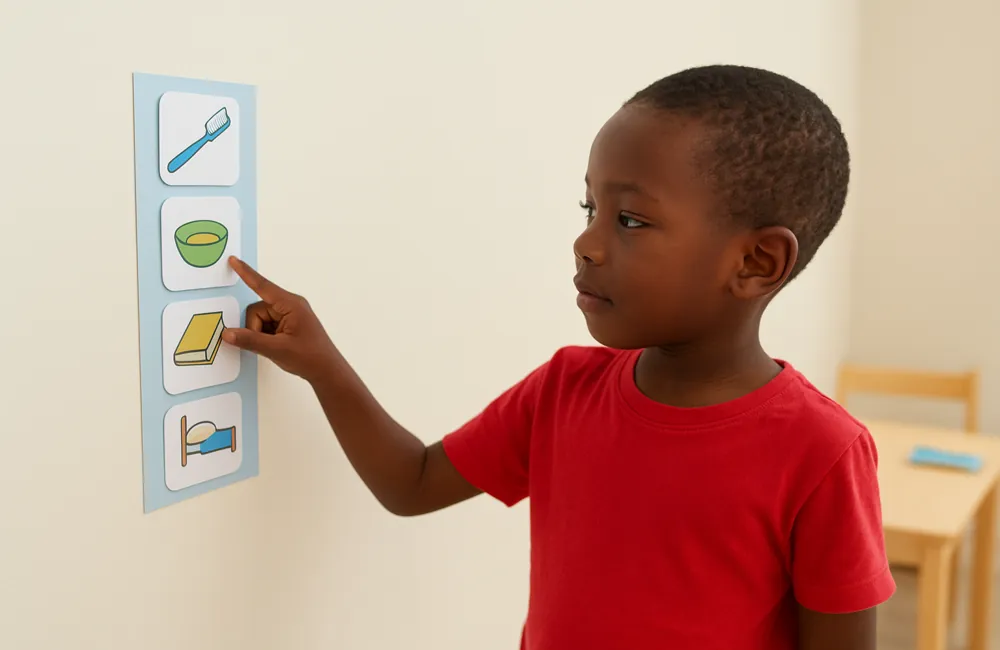
Even if your child cannot read, pictures can show each step. Example: a photo of a toothbrush, a spoon, a school bag. Stick these in order on a wall or board.
Reducing meltdowns through routine
When your child knows what happens next, transitions become smoother. A bedtime chart, for example, reduces resistance because the child sees “bath then story then sleep.”
Flexibility in Nigerian life
Power outages, traffic delays, or cultural events may disrupt routines. Prepare your child with a short sentence: “Today is different. We will do X after Y.” This small step helps reduce stress when life changes.
See Managing Sensory Meltdowns and Simple Home Communication Strategies for more tools that pair well with routines.