Learning to Recognise What the Body Is Saying
Have you ever noticed that your child seems unaware that they are hungry, thirsty, tired, too hot, or need to use the toilet until the discomfort becomes difficult to ignore?
Sometimes, an autistic child may struggle to recognise or communicate what is happening inside their body. They may continue playing despite being hungry, become unusually distressed when they need the toilet, or fail to notice that they are becoming physically uncomfortable.
One possible explanation is a difference in interoception, the body’s ability to sense and interpret internal signals.
Understanding interoception can help parents recognise that some everyday needs may not be as obvious to their child as they are to other people.
What Is Interoception?
Interoception is the sense that helps us notice what is happening inside our bodies.
It provides information about internal experiences such as hunger, thirst, fullness, temperature, heartbeat, breathing, pain, and the need to use the toilet.
These signals help us recognise when something needs attention.
For example, when your stomach feels empty, you may recognise that it is time to eat. When your bladder feels full, you may understand that you need to use the toilet.
Some autistic people experience differences in how they notice, interpret, or respond to these internal signals. This can make it harder to identify physical needs or communicate them before discomfort becomes significant.
How Interoception Differences May Appear
Interoception differences can look different from one child to another.
A child may not recognise hunger until they become irritable or unusually tired. Another may struggle to identify thirst and rarely ask for water independently.
Some children may have difficulty recognising when they are becoming too hot or cold. Others may not notice the early signs that they need to use the toilet.
Emotional experiences can also be connected to interoception. A child may recognise that something feels uncomfortable without understanding whether they are anxious, frustrated, excited, or overwhelmed.
These experiences are not necessarily deliberate. The child may genuinely be struggling to interpret what their body is communicating.
Help Your Child Connect Sensations With Words
One practical approach is to introduce simple language around physical experiences.
During everyday activities, describe what you notice.
“Your tummy is making a sound. Would you like something to eat?”
“Your face looks warm. Let’s get some water.”
“You have been running for a while. Let’s sit down and rest.”
You can also introduce words such as hungry, thirsty, full, tired, hot, cold, uncomfortable, and pain.
For children who do not use spoken language, pictures, gestures, communication boards, or AAC can provide ways to communicate these needs.
The purpose is to help the child gradually connect physical sensations with language and meaningful responses.
Build Predictable Opportunities for Checking In
Some children benefit from regular opportunities to check their physical needs rather than waiting until they communicate discomfort.
For example, parents can build water breaks, meals, rest periods, and toilet opportunities into familiar routines.
You might ask:
“Would you like some water?”
“Is your body ready for a rest?”
“Do you need the toilet?”
Over time, these moments can help children become more familiar with the relationship between activities, physical sensations, and personal needs.
However, scheduled reminders should complement, not replace, attention to the child’s individual signals.
Use Visual Supports
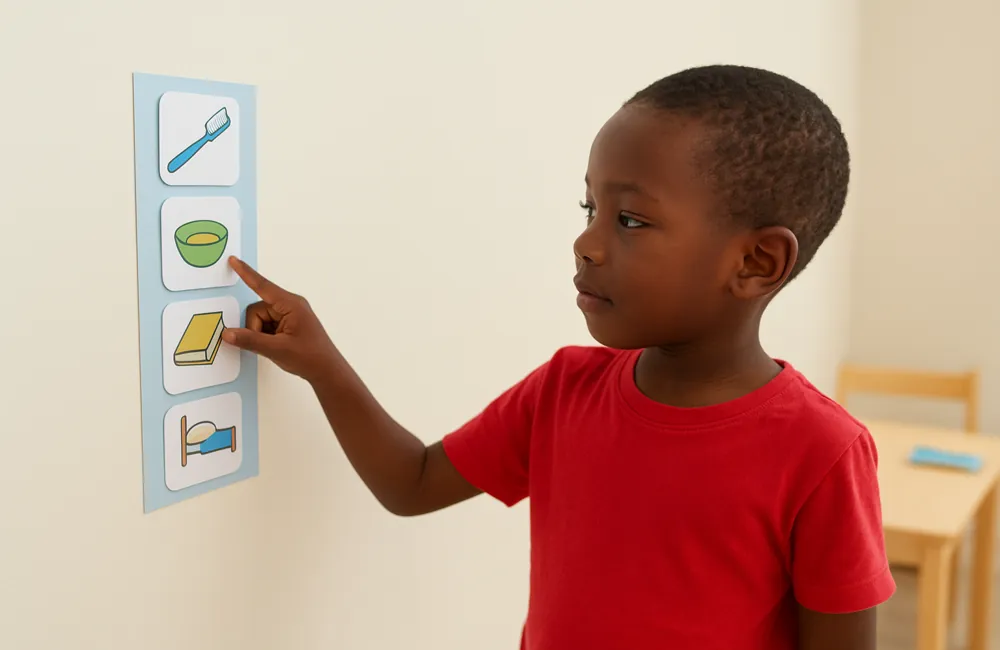
Visual supports can help children identify internal experiences.
A simple feelings and body chart might include pictures representing hunger, thirst, tiredness, pain, and temperature.
A child can point to the picture that best represents how they feel.
Some children may benefit from a body outline that helps them indicate where they are experiencing discomfort.
These tools can be particularly valuable when a child understands an experience but finds it difficult to describe.
Take Physical Complaints Seriously
When a child has difficulty communicating internal sensations, adults need to be particularly attentive to changes in behaviour.
Unusual irritability, withdrawal, changes in eating, disturbed sleep, or sudden distress may sometimes be associated with physical discomfort.
Do not assume that these changes are automatically behavioural or caused by autism.
If you suspect pain, illness, dehydration, or another physical concern, seek appropriate medical advice.
How Bethel Xafe Supports Families
At Bethel Xafe, we believe understanding a child’s physical experiences is an important part of providing meaningful support.
Families can benefit from learning how interoception may affect everyday routines, communication, eating, toileting, and emotional awareness.
We encourage parents to observe individual patterns, introduce useful language, and create opportunities for children to communicate physical needs in ways that work for them.
Final Thoughts
A child may not always recognise that they are hungry, thirsty, tired, or uncomfortable.
Sometimes, the challenge is not knowing what the body needs. It is recognising the signal in the first place.
When parents understand interoception, they can become more attentive to subtle signs and help children gradually develop greater awareness of their internal experiences.
Learning to listen to the body is another important part of growing towards independence.