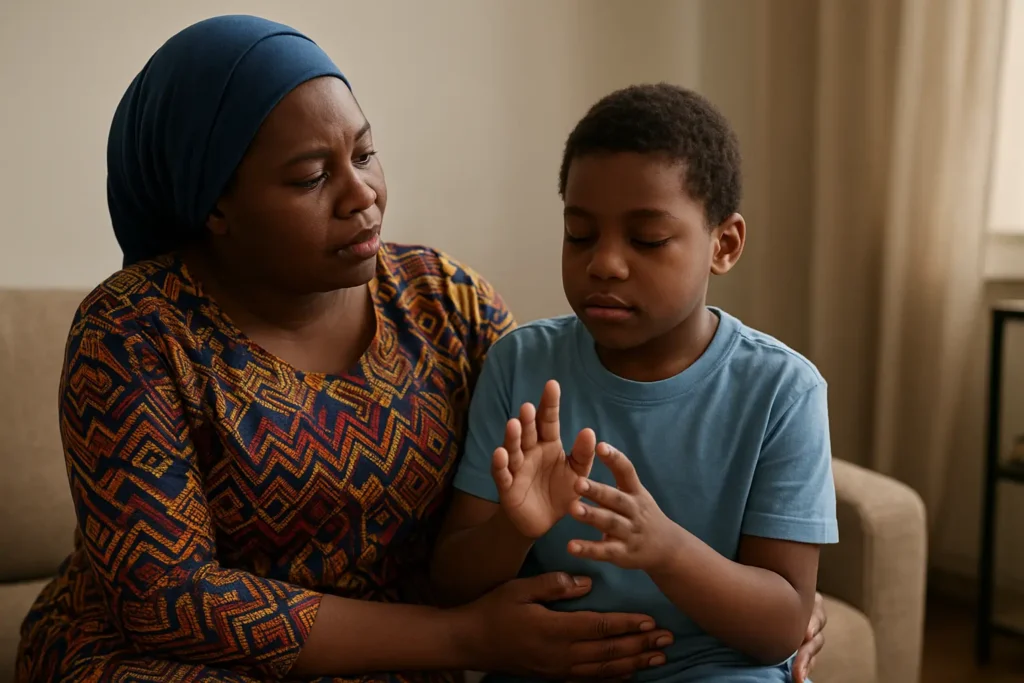
At Bethelxafe Autism Foundation, we often meet parents who ask, “Why does my child flap their hands, pace, rock, hum, or tap repeatedly?” These actions are known as stimming, and they are natural coping behaviors for many autistic individuals.
In Nigeria, stimming is still misunderstood. Some people describe it as stubbornness, poor upbringing, or spiritual disturbance. Because of this, many autistic children are corrected harshly or shamed for behaviors that actually help them feel calm and safe.
What Is Stimming?
Stimming means self stimulatory behavior, and it helps autistic individuals regulate their emotions and manage sensory overload.
Common examples include:
- Hand flapping
- Rocking back and forth
- Pacing repeatedly
- Humming or making repeated sounds
- Tapping fingers or objects
- Spinning or moving in circles
Why Do Children Stim?
Many autistic children stim because it helps them:
- Calm themselves during stressful moments
- Express excitement
- Cope with chaotic or noisy environments
- Improve focus
- Release extra energy
In busy Nigerian settings like markets, schools, and churches, stimming can be a helpful way for children to feel grounded.
When Should Parents Be Concerned?
Stimming is usually harmless. You may need to pay closer attention if:
- It leads to self injury
- It interrupts daily activities significantly
- It is triggered by serious distress or fear
Gentle support is far more effective than correction.
Practical Support for Parents
Helpful strategies you can use at home include:
- Observe what triggers the stimming
- Provide safe alternatives like fidget toys or textured objects
- Create a calm space where your child can relax
- Use consistent routines to reduce anxiety
- Teach family members with kindness so your child is not shamed
How This Connects to Our Mission
As one of the autism foundations in Nigeria dedicated to education and family support, Bethelxafe Autism Foundation continues to promote understanding around behaviors like stimming. When caregivers offer patience instead of judgment, autistic children feel safer and more confident.